
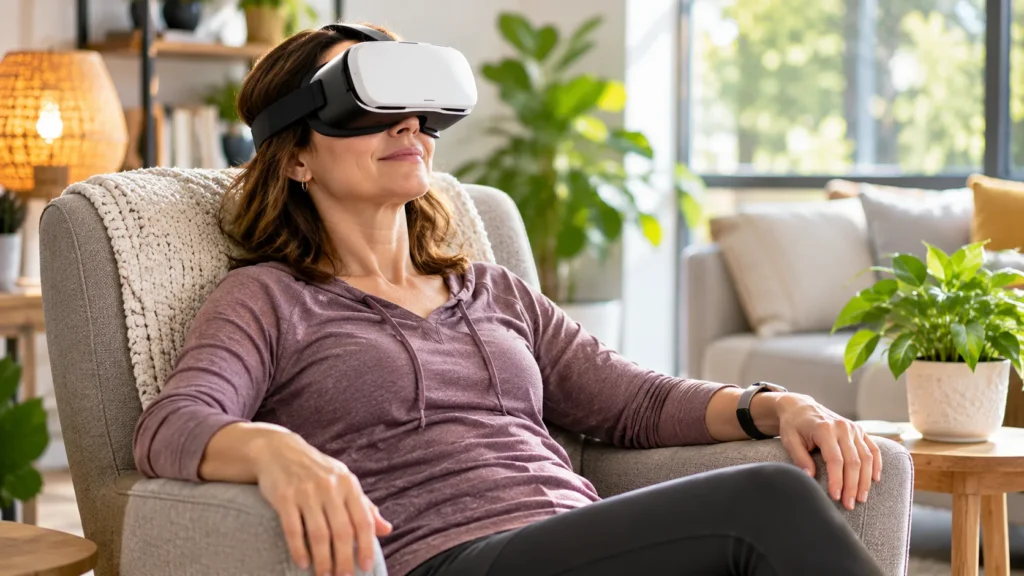
Could a virtual reality headset become part of a chronic pain treatment plan? Researchers are investigating whether immersive digital experiences can help people practice relaxation, learn pain-coping skills, and participate in rehabilitation. Virtual reality (VR) therapy for chronic pain has attracted renewed interest in 2026, with new clinical trials and research reviews examining both its possibilities and limitations.
Unlike ordinary gaming, therapeutic VR may use guided breathing, pain education, interactive movement, or calming environments. Some programs can be completed at home, while others are supervised by clinicians. However, VR is not a proven cure for chronic pain, and results depend on the type of program, the condition being treated, and the quality of the evidence.
What Is Virtual Reality Therapy for Chronic Pain?
Virtual reality therapy places users inside a computer-generated environment through a headset. The experience may create the sensation of sitting beside a lake, exploring a peaceful landscape, completing breathing exercises, or interacting with objects during rehabilitation. Headphones, controllers, and tracking sensors may add to the sense of immersion.
Programs designed for pain care generally fall into two categories. Distraction-based VR directs attention toward engaging surroundings or activities. Skills-based VR teaches techniques such as relaxation, mindfulness, pain education, and controlled breathing that patients may continue using beyond a session.
These methods overlap with familiar non-drug approaches. Pain Defeat’s guide to mindfulness practices that may ease pain explains some of the skills that can also appear in VR programs.
How Could VR Influence Pain?
Pain is a complex experience shaped by the nervous system, attention, emotions, memories, and physical signals. Immersive environments may redirect attention away from uncomfortable sensations for a limited period. They can also provide a structured place to rehearse calming skills without everyday distractions.
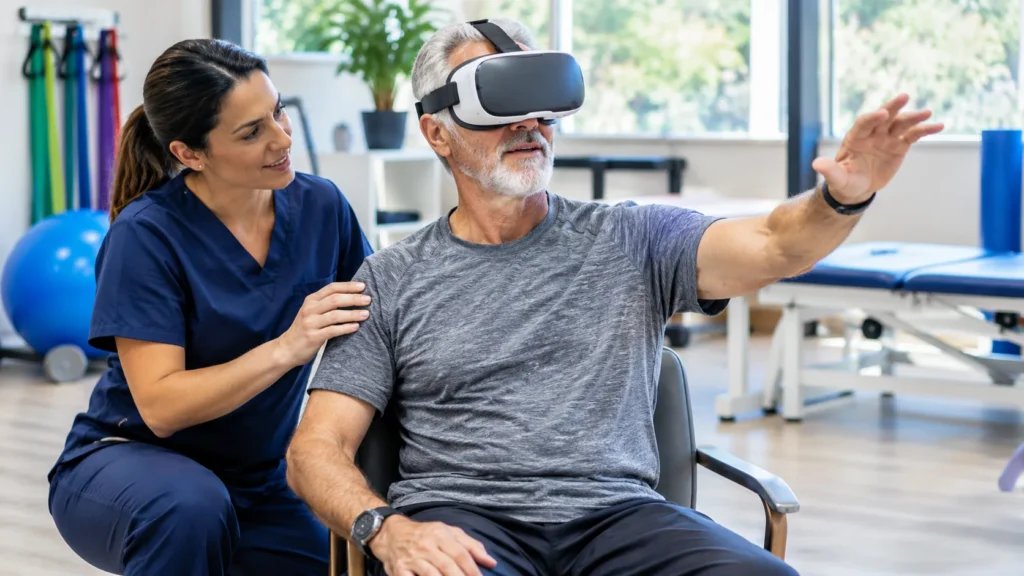
For people who fear movement because of persistent pain, some VR activities encourage gradual, guided participation. In rehabilitation settings, a therapist might use a virtual activity to make reaching, turning, or other appropriate movements more engaging. These activities should still match the person’s diagnosis and physical abilities.
VR does not necessarily treat the underlying cause of pain. Instead, its potential value may lie in changing the experience of symptoms or supporting behavioral and physical therapy. It is best understood as a possible addition to individualized care, not a replacement for diagnosis.
What Did the 2026 Research Find?
One of the most informative studies appeared in npj Digital Medicine in February 2026. The randomized trial involving 385 adults with chronic low back pain compared skills-based VR, distraction VR, and a sham VR experience using two-dimensional videos.
All three groups showed some improvement over time. Crucially, however, neither active VR approach performed significantly better than sham VR on the study’s primary measure of how much pain interfered with daily life. Researchers observed an exploratory difference in opioid-use reporting for one group, but that result requires further investigation. This trial demonstrates why an attractive technology should not be assumed to outperform simpler alternatives.
A separate October 2026 systematic review comparing VR with exercise-based interventions analyzed 15 randomized trials with 659 participants who had chronic spinal pain. It found some statistically favorable results for VR, but the evidence was rated very low certainty, and the differences did not reach commonly used thresholds for meaningful clinical improvement.
Other findings offer reasons to continue studying the technology. An August 2026 review of VR for chronic neck pain found improvements in pain and selected movement-related outcomes across nine trials. Its authors noted important limitations, including small studies and differences between treatment protocols.
Looking across digital approaches more broadly, an October 2026 review of 92 randomized trials found small to moderate average improvements in pain and disability with digital health interventions. VR and exercise-oriented telerehabilitation showed potentially useful results, but findings across intervention types were not equally certain.
Which Chronic Pain Conditions Are Being Studied?
Research has focused heavily on chronic low back pain, but clinicians are also investigating VR in neck pain and other musculoskeletal conditions. The treatment experience may look different depending on the condition:
- Chronic low back pain: Structured programs may emphasize pain education, breathing, relaxation, and coping skills.
- Persistent neck pain: Some studies pair immersive exercises with conventional physiotherapy.
- Musculoskeletal rehabilitation: Interactive activities may encourage participation in carefully selected movements.
- Other chronic pain conditions: Evidence is still developing, and benefits established for one diagnosis should not be assumed for another.
A 2026 scoping review of VR for chronic musculoskeletal pain also examined usability and patient satisfaction. Whether someone enjoys using a headset matters because an intervention is unlikely to help if they cannot comfortably complete it.
Is Any VR Pain Therapy FDA Authorized?
Yes, but authorization is specific. In November 2021, the U.S. Food and Drug Administration authorized EaseVRx, a prescription immersive VR system intended as an adjunctive treatment for adults with diagnosed chronic lower back pain. The program uses behavioral skills, including approaches related to cognitive behavioral therapy.
This does not mean every consumer VR headset or wellness app is an FDA-authorized medical treatment. A prescription device has a specific intended use, and products can differ substantially in their content, clinical testing, and safeguards. Availability, coverage, and suitability should be checked with a qualified provider.
What Are the Potential Benefits and Limitations?
Possible advantages include the convenience of certain home-based programs, engaging formats for relaxation exercises, and additional opportunities to practice coping skills. Some people may find a guided virtual environment easier to follow than a written instruction sheet or audio recording.
However, a 2026 trial found that active VR did not beat sham VR on its main outcome. Studies also use different devices, schedules, patient populations, and measurements. This makes it difficult to identify one ideal program or predict who will benefit. Cost, access, technical setup, comfort, and follow-through can be barriers.
VR should therefore be considered alongside established approaches, including the options described in Pain Defeat’s guide to pain management without medication.
Is Virtual Reality Therapy Safe?
VR is not appropriate for everyone. The FDA’s guidance on AR and VR medical devices identifies possible risks such as motion-related nausea, dizziness, fatigue, vision effects, head or neck strain, and privacy concerns.
People with significant balance difficulties, a history of seizures, severe motion sensitivity, or certain neurological or visual conditions should ask a clinician whether an immersive headset is appropriate. Anyone using VR for rehabilitation should have adequate space and the level of supervision they need to prevent falls.
If symptoms become uncomfortable, stop the session. Do not use an immersive headset while driving, walking near traffic, or performing tasks that require awareness of the surrounding environment.
How to Discuss VR Therapy With Your Healthcare Provider
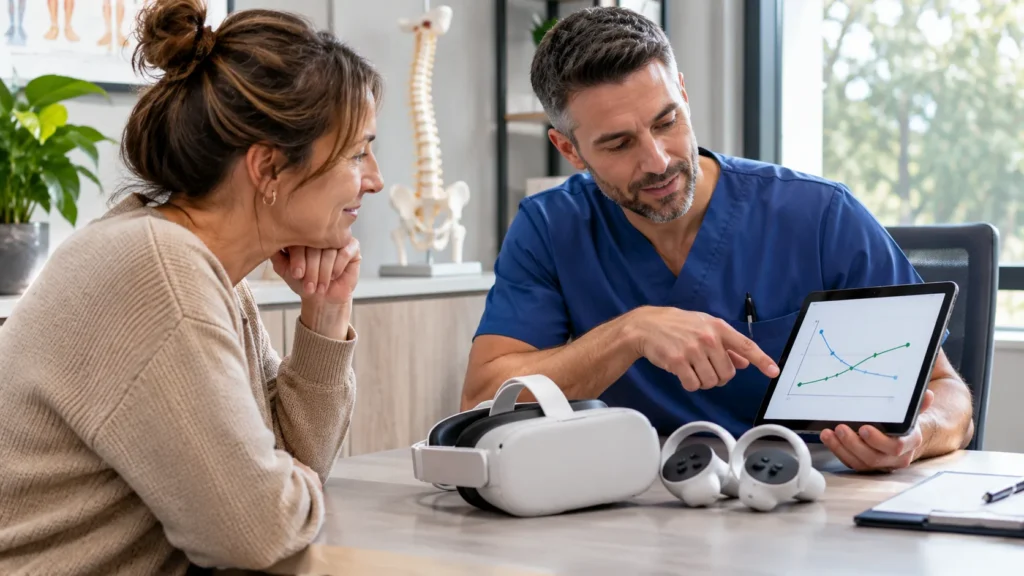
Before choosing a program, ask what condition it is designed to treat, whether clinical evidence supports its use, and whether it is a regulated medical device or a general wellness product. Also ask about the session schedule, likely costs, accommodations for glasses or mobility limitations, and what to do if dizziness or headache occurs.
Set goals beyond a single pain rating. Being able to walk longer, tolerate a workday, sleep more consistently, or participate in a favorite activity may be more meaningful measures. Since symptoms often fluctuate, a brief record of function and daily activities can provide useful context. Pain Defeat’s article about digital pain tracking offers related ideas.
Can VR Replace Physical Therapy or Other Treatments?
Current evidence does not support replacing appropriate medical care or exercise-based rehabilitation with VR alone. A virtual session may complement a treatment program, but it cannot diagnose a condition, restore strength without suitable activity, or address every cause of persistent pain.
Other foundations still matter. Physical activity suited to the individual, appropriate treatment of underlying conditions, and restorative sleep can contribute to long-term function. Readers can learn more from Pain Defeat’s article on the connection between sleep and chronic pain.
Frequently Asked Questions
Does VR therapy permanently eliminate chronic pain?
No. Some studies report improvement in pain or daily function, but long-term effectiveness remains uncertain. VR is not a guaranteed or permanent cure.
Can I use a regular gaming headset for pain treatment?
A regular headset may display relaxing content, but that is not equivalent to a clinically tested therapeutic program. The intended use and evidence behind the software matter as much as the hardware.
Is VR therapy only for back pain?
No. Researchers are studying several conditions, including neck pain and broader musculoskeletal rehabilitation. Nevertheless, the strength of evidence varies by diagnosis.
Final Thoughts
Virtual reality therapy for chronic pain is a developing field with genuine clinical interest. Research published in 2026 suggests possible benefits for selected patients and activities, while also revealing substantial uncertainty about how much better VR performs than simpler approaches.
For now, the most practical approach is to treat VR as a potential supporting tool, choose programs carefully, and discuss them with a healthcare professional who understands the underlying pain condition. A useful treatment plan should focus on safety, function, and everyday quality of life rather than promises of instant relief.