

Chronic pain management is rapidly evolving as digital health tools and artificial intelligence become part of everyday care. One of the most promising developments in 2026 is the rise of digital pain tracking apps and AI-powered symptom journals. These tools help patients record pain levels, identify triggers, and share structured data with healthcare providers for better treatment decisions.
What Are Digital Pain Tracking Apps?
Digital pain tracking apps are mobile or web-based tools that allow users to log daily pain levels, symptoms, medications, sleep quality, and activity levels. Unlike traditional paper journals, these apps use data analytics to identify patterns that might otherwise go unnoticed.
Many apps now include AI features that analyze entries over time and provide insights into flare-up triggers such as stress, posture, weather changes, or physical activity.
For more foundational strategies, you can also read our guide on “Effective Strategies for Managing Chronic Pain”.

Why AI Is Changing Pain Management
Artificial intelligence is transforming how chronic pain is understood. AI systems can process thousands of data points from a patient’s symptom history and detect subtle correlations humans may miss.
For example, an AI journal might detect that pain levels increase after poor sleep or prolonged sitting. This allows patients and doctors to adjust treatment plans more effectively.
Trusted health organizations such as the National Institutes of Health and CDC continue to study how digital health tools improve chronic pain outcomes.
Key Benefits of AI Pain Tracking Tools
1. Identifying Hidden Pain Triggers
AI systems can detect correlations between daily activities and pain flare-ups. This includes sleep disruption, stress levels, diet, and physical movement patterns.
2. Improved Communication With Doctors
Instead of vague descriptions, patients can provide structured data reports that help doctors understand the severity and progression of pain more accurately.
3. Personalized Treatment Adjustments
Healthcare providers can use tracking data to adjust medications, recommend therapies, or suggest lifestyle modifications tailored to the patient.
4. Better Long-Term Pain Awareness
Tracking pain consistently helps patients understand their condition better and take a more active role in managing it.
You may also find helpful insights in our article on “The Benefits of Chiropractic Care in Pain Relief”.
How Digital Pain Journals Work
Most AI pain tracking apps follow a simple workflow:
- Patients log daily pain levels and symptoms
- The system collects behavioral data (sleep, movement, stress)
- AI algorithms analyze trends over time
- The app generates insights and recommendations
Some advanced tools also integrate with wearable devices such as smartwatches and fitness trackers, allowing automatic data collection without manual input.
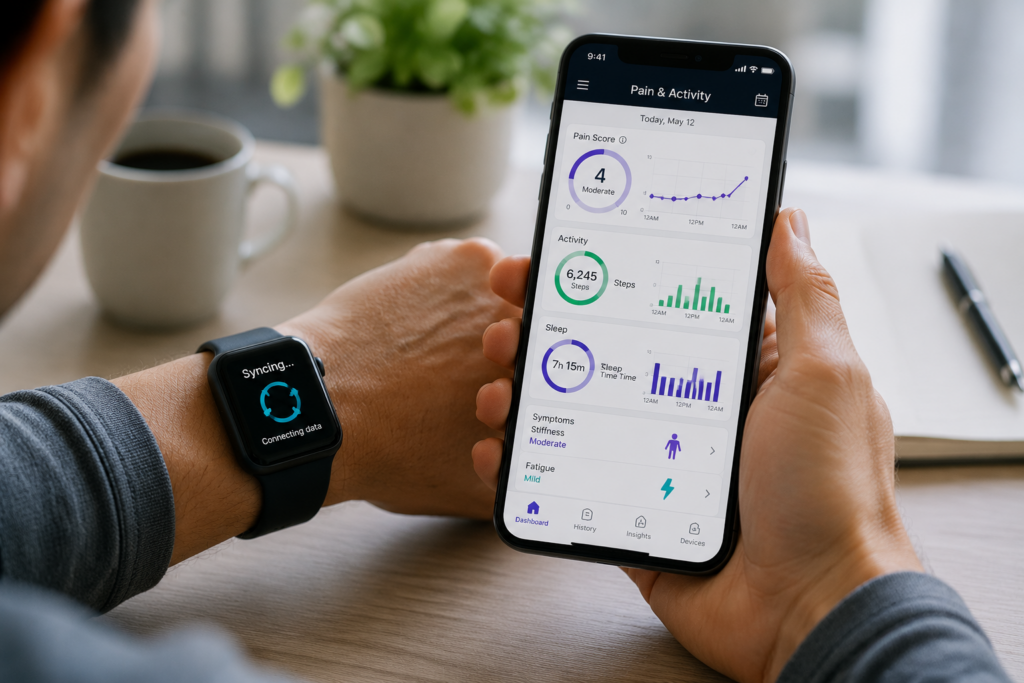
Wearables and Digital Pain Tracking Integration
Wearable devices like smartwatches can track heart rate variability, movement, sleep quality, and stress levels. When combined with pain tracking apps, they create a complete picture of a person’s health patterns.
This integration is especially useful for people managing conditions such as fibromyalgia, arthritis, nerve pain, and back pain.
Learn more about lifestyle-based recovery in our guide on “How Better Sleep Can Dramatically Reduce Chronic Pain”.
Are AI Pain Apps Reliable?
While AI-powered pain tracking is promising, it is not a replacement for medical diagnosis. These tools are best used as supportive systems that improve communication between patients and healthcare providers.
According to research shared by Mayo Clinic, digital health tools are most effective when combined with traditional medical care and physical evaluation.
Limitations to Keep in Mind
Despite their benefits, digital pain tracking tools have limitations:
- They rely on consistent user input
- AI insights are not always clinically validated
- Data privacy concerns may apply
- They cannot replace physical diagnosis
Still, when used properly, they provide valuable support for chronic pain management.

Future of AI in Chronic Pain Management
The future of chronic pain treatment is moving toward personalized, data-driven care. AI systems are expected to become more advanced in predicting flare-ups before they happen and recommending preventive strategies in real time.
With continued development, these tools may eventually integrate directly into clinical systems, allowing doctors to monitor patient pain remotely and adjust treatments faster.
Conclusion
Digital pain tracking apps and AI symptom journals are transforming chronic pain management. While they are not a cure, they offer powerful insights that help patients and doctors make better decisions. As technology continues to evolve, these tools will likely become a standard part of chronic pain care.
Combining AI tracking with exercise, sleep improvement, and mindfulness creates a more complete and effective approach to long-term pain relief.